Financial Intelligence
Why Excel Is Dangerous for Growing Cyprus Businesses
Andreas · Head of Growth

Spreadsheets work until they don't. As transaction volumes rise and financial complexity grows, Excel quietly becomes a liability. Here is what Cyprus SMEs need to know.
In many Cyprus businesses, Excel has long since outgrown its role as a helpful tool and quietly promoted itself to the position of entire financial operating system, running the show behind every invoice, every VAT estimate and every cash flow projection.
Invoices live in spreadsheets, VAT estimates sit in manually maintained tables, cash flow projections travel between founders, accountants and the occasional external advisor, while supplier payments are tracked through a creative arrangement of coloured cells and handwritten notes in comment fields. It all feels reassuringly familiar, pleasantly flexible and, for a while at least, entirely under control.
In the early stages of a company, when transaction volumes are low and financial complexity is limited, spreadsheets genuinely can provide enough structure to keep operations moving. The trouble is that growth has a habit of quietly rewriting the rules.
The Reality of Financial Management in Cyprus SMEs
Across Cyprus, many small and medium-sized businesses still rely heavily on spreadsheets for financial tracking and planning. Technology resistance has little to do with it. This is simply how things have always been done, and old habits in accounting tend to be remarkably persistent.
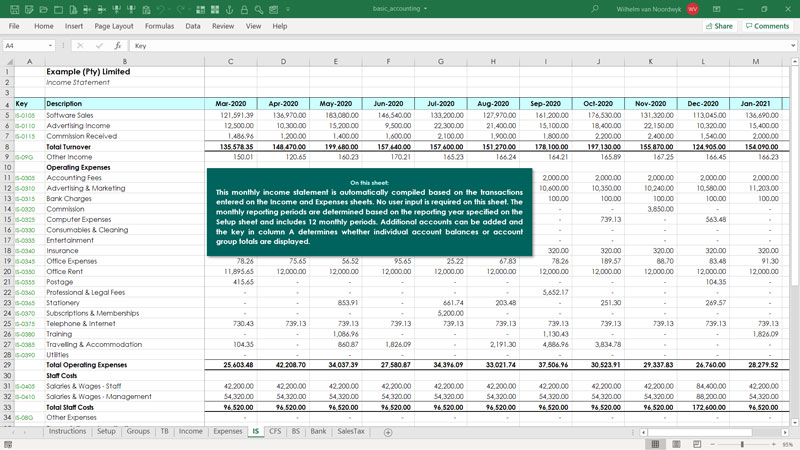
Traditionally, accounting in Cyprus has been externalised. Business owners collect invoices and receipts, maintain basic financial overviews internally and then transfer documentation to their accountant on a monthly or quarterly basis. Within this structure, Excel naturally becomes the bridge between operational activity and formal accounting.
In practice, that means spreadsheets are used for everything from maintaining lists of outstanding customer invoices and tracking supplier obligations to estimating VAT liabilities, monitoring director loan balances and building simple cash flow forecasts. These files are often created internally or purchased as templates from online marketplaces, and they tend to evolve organically as the business grows.
At first, this flexibility genuinely feels like an advantage. Over time, however, it quietly becomes a source of risk.
Manual Effort Creates Invisible Exposure
Spreadsheets depend entirely on human discipline, which is another way of saying they depend on something that is reliably unreliable under pressure.
Every new invoice needs to be entered correctly, every payment updated by hand, and every formula maintained with absolute consistency. As transaction volumes increase, the margin for error expands with them. A missed update in a VAT tracking sheet can sit there unnoticed until submission deadlines are looming, and a supplier payment recorded in one version of a file may simply not exist in another.
These issues rarely arise from negligence. They are the natural consequence of manual systems being asked to do more than they were designed for. Business owners often believe they have financial clarity because a spreadsheet exists, when in reality the information inside it may already be several days or weeks out of date.
The Problem of Version Fragmentation
One of the most underestimated risks of spreadsheet-based finance management is version fragmentation, and it tends to creep in faster than anyone expects.
A founder downloads a cash flow file to review figures during travel, while the accountant works from a slightly older version received by email, and a finance assistant updates yet another copy stored locally. Within a few weeks, multiple versions of financial reality coexist, none of them quite wrong but none of them quite right either.
Reconciling these versions requires additional effort and introduces the kind of uncertainty that makes confident decision-making difficult. In fast-growing SMEs, this fragmentation can become operationally dangerous remarkably quickly.
Formula Risk and False Confidence
Spreadsheets offer immense computational power, but that power depends entirely on the correctness of the underlying formulas, and research consistently shows that even experienced users make errors in complex models.
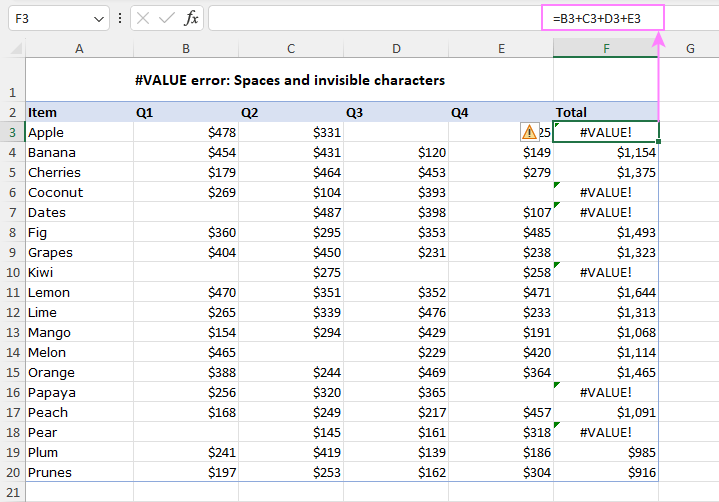
A misplaced reference or an accidentally overwritten cell can distort financial results significantly. Unlike structured accounting systems, spreadsheets do not enforce data integrity. They simply trust the user, which can create a rather dangerous sense of security where financial projections appear precise while resting on foundations that are anything but solid.
Lack of Real-Time Financial Visibility
Perhaps the most significant limitation of spreadsheet-based accounting is the absence of real-time visibility. Financial data is only ever as current as the most recent manual update, which in many businesses means it is already out of date by the time anyone looks at it.
When spreadsheets are updated weekly or monthly, leadership decisions are inevitably made with a delay. Cash flow pressure may become visible too late, and margin deterioration can go unnoticed until corrective action is considerably more difficult and more expensive than it needed to be. In competitive markets, that kind of lag can make the difference between responding to an opportunity and reading about it afterwards.
Inefficient Collaboration with Accountants
External accountants remain central to the financial ecosystem in Cyprus, but spreadsheet-driven workflows often make their job harder than it needs to be. Rather than working from a shared, reliable data set, accountants must interpret internally maintained records, reconcile them with bank statements and reconstruct missing links between transactions.
The result is that valuable time on both sides is spent validating data quality instead of focusing on the advisory work that actually moves a business forward, whether that is tax optimisation, financial planning or strategic investment decisions.
Growth as the Turning Point
Spreadsheets rarely fail in a dramatic, obvious way. Instead, they deteriorate gradually, and by the time the cracks become visible the damage is already well advanced.
A business that once processed fifty transactions per month may eventually handle five hundred, with payment structures growing more complex as recurring subscriptions, international transfers and partial settlements introduce variability. At this stage, financial management shifts from simple tracking to structured system design, and companies that continue relying on spreadsheets tend to experience rising stress around reporting cycles, increasingly demanding VAT preparation and a steady decline in audit readiness.
Growth, in short, has a way of revealing exactly where flexibility ends and fragility begins.
A More Resilient Approach
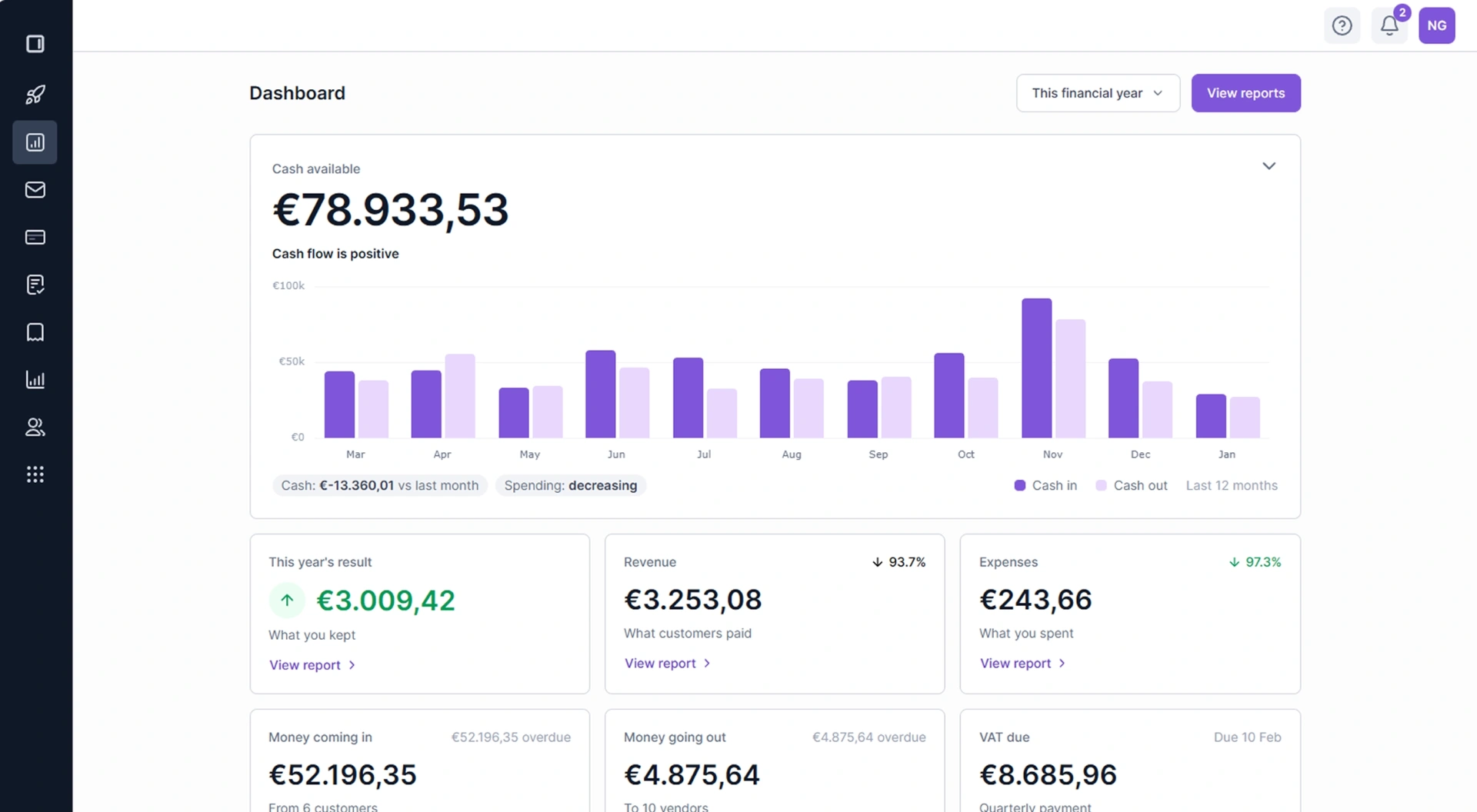
Modern accounting platforms are designed to address precisely these challenges. Instead of manually updating financial records, transactions can be synchronised automatically with bank feeds, invoices and expenses matched intelligently, and financial reports updated continuously as new data enters the system.
Human oversight remains essential, of course, but the nature of that oversight changes considerably. Rather than maintaining spreadsheets, finance teams and founders can focus on understanding trends, managing liquidity and planning expansion.
Structured accounting software also transforms collaboration with external accountants. Shared data environments reduce ambiguity, compliance processes run more smoothly, and confidence in financial reporting increases because the numbers are always current rather than a best guess from last Tuesday.
The Strategic Perspective for Cyprus Businesses
The continued use of spreadsheets in Cyprus SMEs is entirely understandable. It reflects long-standing practices and a pragmatic approach to cost management that has served many businesses well in their early years.
However, as a business scales, the risks associated with manual financial systems become harder to ignore. Transitioning to an integrated accounting platform goes well beyond a technological upgrade. It is an organisational shift that enables more timely decisions, reduces operational friction and supports sustainable growth.
Excel will always remain a powerful tool for analysis and modelling. But as the primary system for financial management in a growing company, its limitations have a tendency to become a strategic liability, often at precisely the moment when getting the numbers right matters most.
Recognising that moment early allows business owners to replace reactive administration with proactive financial leadership.